Nutrient pollution, driven by phosphorus and nitrogen runoff, plays a major role in the degradation of water bodies globally.
Unlike conventional methods that merely retain phosphorus or trap it in sludge, Polonite® captures, stores, and makes it available for reuse—contributing to both clean water and sustainable agricultural production.

Polonite® is an innovative filter media with a high and proven capacity to capture and recycle phosphorus from wastewater and runoff.
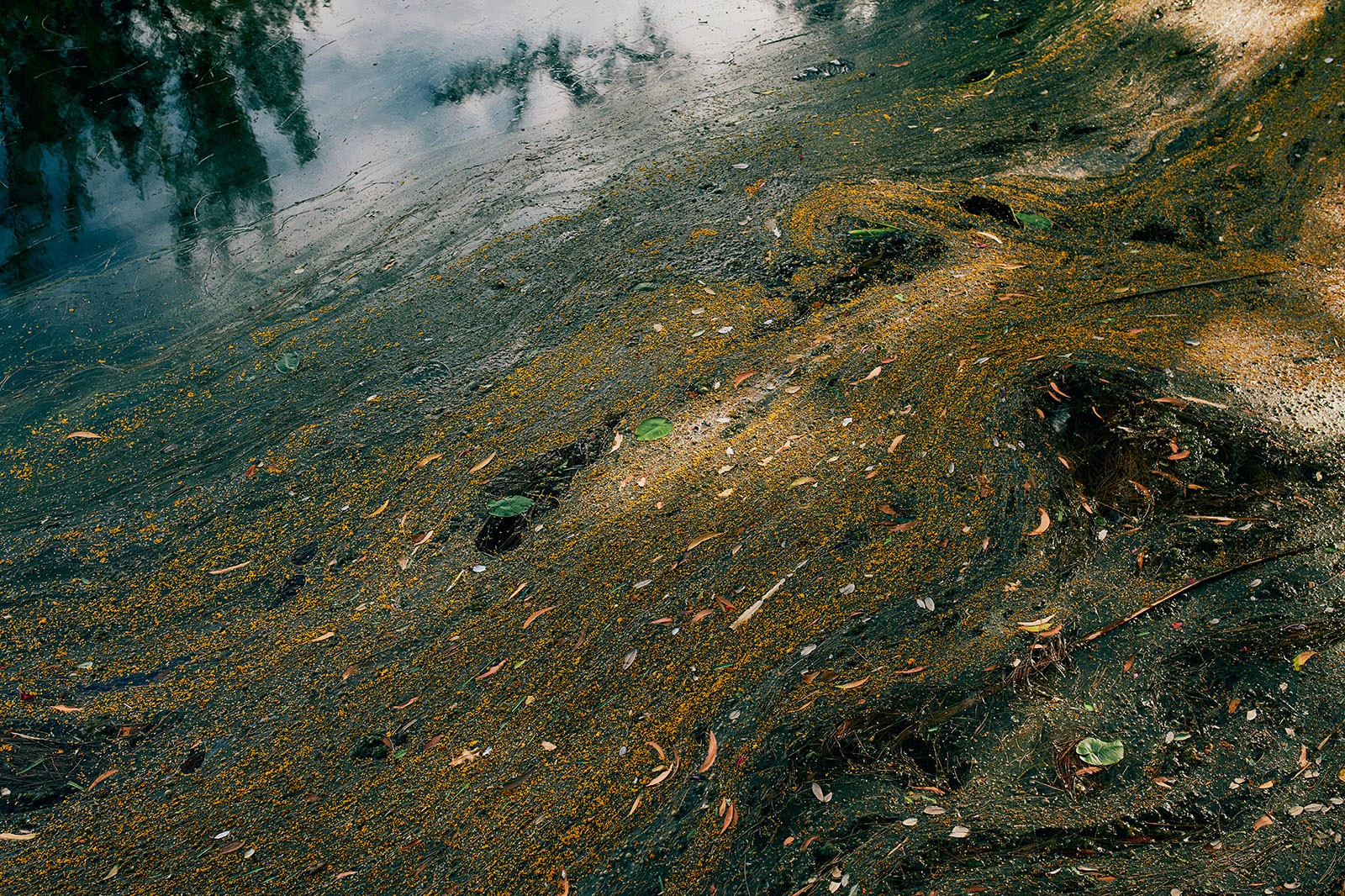
Phosphorus and nitrogen pollution are among the leading causes of water degradation worldwide. When discharged into nature, these nutrients trigger the rapid growth of algae—known as eutrophication—which depletes oxygen, harms aquatic life, and disrupts entire ecosystems.
Sweden has long been a leader in combating eutrophication. Today, over 95% of municipal wastewater undergoes advanced biological and chemical treatment. Yet, major nutrient loads still reach our waters—especially from agriculture and small-scale treatment systems. The challenge now is not just to remove phosphorus, but to recover and reuse it.
Phosphorus – A Resource at Risk
Phosphorus is a finite and irreplaceable element, critical for all living organisms and central to modern agriculture. Yet when mismanaged, it becomes a major contributor to eutrophication—driving algal blooms, oxygen depletion, and ecosystem collapse in lakes, rivers, and coastal waters.
Effective management of this critical resource remains a major challenge. In many systems, phosphorus is removed from water but not recovered; instead, it accumulates in sludge, where it is difficult to reuse and often lost from the nutrient cycle. This approach risks conflating temporary retention with true removal, allowing nutrient pollution to persist in a less visible but equally harmful form.
Meanwhile, global phosphorus reserves are concentrated in a small number of countries, raising concerns about long-term accessibility, geopolitical dependency, and market volatility. Continued reliance on mined phosphorus—combined with ongoing losses through wastewater and agricultural runoff—not only threatens aquatic ecosystems but also undermines the sustainability of agricultural systems.
Since the 1990s, scientists have warned of peak phosphorus: the point at which global extraction rates begin to decline. Although estimates vary—from 50 to several hundred years—there is broad consensus that current practices are unsustainable. Without effective recovery and reuse strategies, we risk compromising both water quality and global food security.
Recycling Phosphorous is no longer optional
We must shift from removal to recovery. While some phosphorus recycling methods exist—such as struvite or calcium phosphate precipitation—they are often complex, energy-intensive, and cost-prohibitive.
We need solutions that are simple, scalable, and circular. Phosphorus is too valuable to discard.

Rethinking Phosphorus Capture: Removal vs. Recovery
Phosphorus is an element. It can’t be destroyed—only captured, stored, or reused. So when we speak of “removal,” we must ask: is it real purification, or temporary retention?
Soil or
Sand Beds
Buffering, Not Purifying
Used in many small-scale systems, soil or sand beds can retain phosphorus temporarily. But once saturated, they start leaking nutrients back into the environment—ultimately contributing to long-term eutrophication.
Chemical Precipitation
Effective, but Not Circular
This method involves dosing the wastewater with aluminum or iron compounds to bind phosphorus into solid flocs. While effective when correctly maintained, it relies heavily on external inputs:
• Continuous chemical supply
• Precise dosing, adapted to actual flow
• Risk of system failure if chemicals run out
Even when functioning perfectly, this method produces up to 50% more sludge that is difficult to recycle. Chemically bound phosphorus is tightly locked, and less than 20% of Swedish wastewater sludge is returned to agriculture. Most ends up incinerated or landfilled.
Reactive Filter Media
Polonite the Circular Alternative
Polonite ® represents a fundamentally different approach. It captures phosphorus efficiently—and keeps it in a form that can be safely returned to the soil.
Meet Polonite ® – Reactive, Regenerative, Remarkable
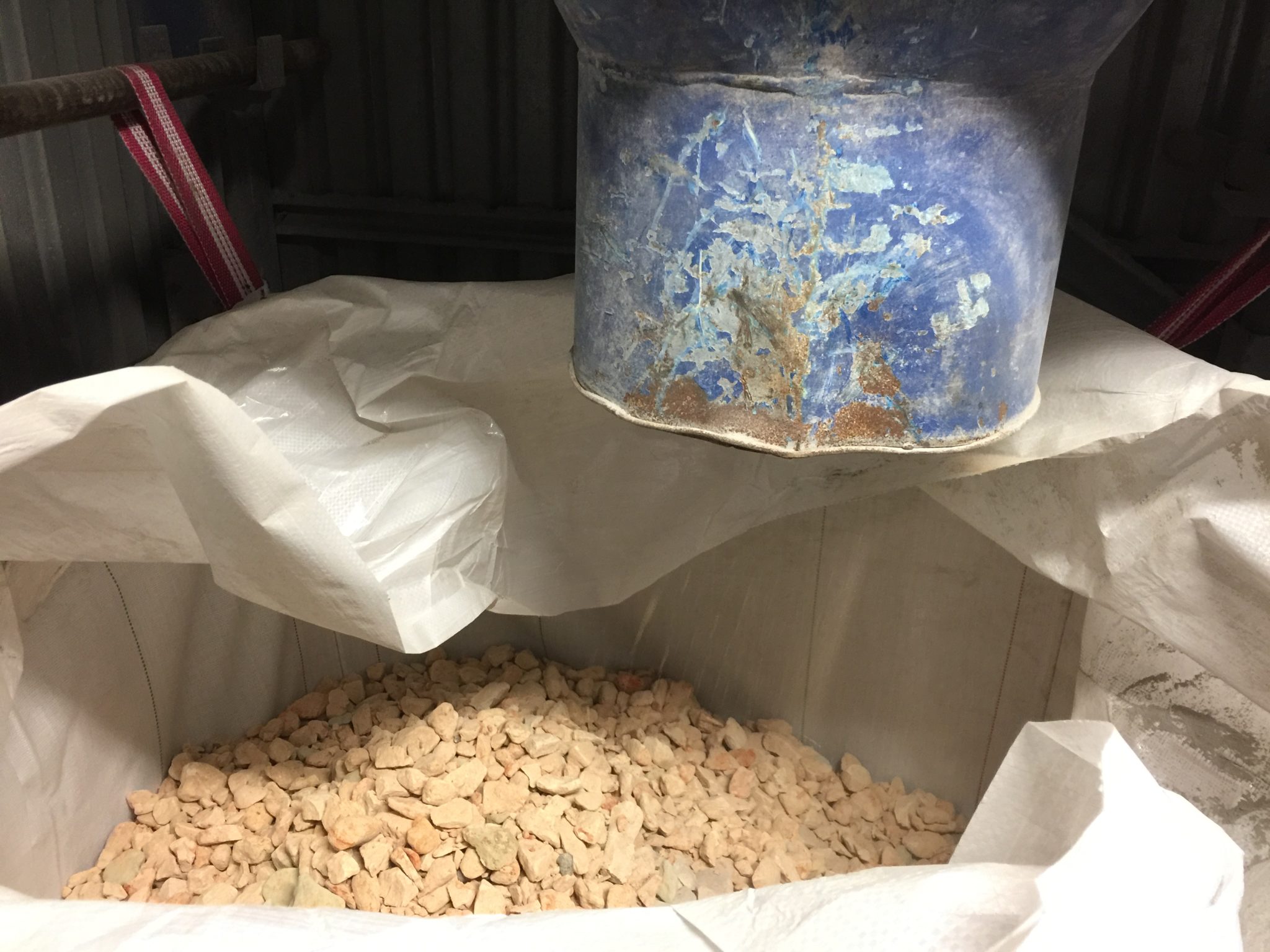
Polonite® is an innovative filter media with a high and proven capacity to capture phosphorus from wastewater and runoff. It is made from a natural sedimentary rock called Opoka, historically used as a building material. Nothing is added or removed—only processed. Through crushing, sieving, and thermal treatment, Opoka becomes Polonite®, a powerful tool for both phosphorus removal and recycling.
Based on a naturally occurring mineral, enhanced through thermal activation
Used in wastewater treatment and runoff control
Recycled after use to enrich agricultural soils
Contributes to bacterial reduction and odor control
How it works
The effectiveness of Polonite® lies in its chemistry and simplicity.
New filters start with a pH above 12 and maintain reactivity until around pH 9.
Large internal surface area (500 kg = surface area of 40 tons of sand).
Consistent phosphorus capture rates above 90% over time.
No moving parts = no risk of mechanical failure.
Backed by Science.
Proven in the Field.
Polonite ® has been studied for over 20 years and is already in use in more than 1 6 ,000 systems across Europe. It delivers real-world results—reliably and sustainably.
15K+
INSTALLATIONS
Delivering results across Europe
Decentralized Polonite® systems are in use across rural and residential areas—removing phosphorus and protecting local water bodies.
100+
TONS OF PHOSPHORUS CAPTURED
Turning pollution into a resource
Phosphorus removed through filtration is returned to soil as a slow-release fertilizer, supporting regenerative agriculture.
20+
YEARS OF RESEARCH & INNOVATION
Scientifically proven, field validated
Developed at the Royal Institute of Technology (KTH), our solution is backed by decades of environmental research and technical refinement.
From Filter to Fertilizer
When Polonite® reaches its capacity, it doesn’t become waste—it becomes a resource.

Saturated media can be air-dried and spread on farmland using standard agricultural equipment. It contains:
Slow-release phosphorus in a plant-available form
Calcium and silicon to support soil health, along with beneficial minerals like potassium.
No heavy metal contamination
Scale your impact with Polonite®
Ready to integrate resilient phosphorus recovery into your system? Leave your email, and our technical team will reach out to discuss your specific site requirements and integration options.